Bordeaux UNESCO walk: how to explore the Port of the Moon from your hotel
Why a Bordeaux UNESCO walk starts at Place de la Bourse
The most revealing Bordeaux UNESCO walk begins at Place de la Bourse, where the city finally turns to face the Garonne. This riverfront square, designed in the 18th century by Ange‑Jacques Gabriel, is one of the earliest major French ensembles to open itself towards the water rather than close around a royal statue, and that decision still shapes how you experience the surrounding architecture and the wider city. Stand at the edge of the Miroir d’Eau and you will feel how the long classical façades, the slow river traffic and the wide sky create a grand outdoor salon that quietly announces Bordeaux as a mercantile power rather than a defensive fortress.
For travellers choosing a central or luxury hotel in Bordeaux, proximity to this square is not just convenient for a walking tour, it is a way of plugging directly into the city’s Enlightenment story. Many premium properties sit within a ten‑minute walking radius of Place de la Bourse (roughly 600–800 metres), which means your first morning in France can begin with a coffee on the quai and a guided loop that orients you before the day’s Bordeaux wine tastings. A well‑designed tour Bordeaux itinerary will often use this riverfront as a meeting point, because from here the crescent of the Port of the Moon and the logic of the UNESCO World Heritage listing become legible in a single slow turn of the head.
Look closely at the symmetry of the façades and you will notice how the architecture choreographs your movement, nudging you along the curve of the river towards the Quartier Saint‑Pierre. This is where a private guide earns their fee, pointing out how the stonework, the mascarons and the rhythm of the arcades encode the ambitions of the Bordeaux métropole in the eighteenth century. On a well‑paced walking tour, you will cross the Miroir d’Eau several times, watching the reflections of the grand buildings dissolve and reappear, a contemporary intervention that reads the Enlightenment project backwards and reminds you that this Bordeaux UNESCO landscape is still evolving.
Reading the Miroir d’Eau and the riverfront from a luxury base
From a high‑floor suite in a riverfront hotel, the Miroir d’Eau looks like a minimalist sculpture laid at the feet of Place de la Bourse. Step down to street level during your Bordeaux UNESCO walk and it becomes a democratic stage, where children run through mist and office workers cut diagonally across the shallow water, softening the severe geometry of the classical monument. This is landscape architect Michel Corajoud’s quiet genius: he turns the grand façade into a temporary mirage, so that the city’s most formal architecture is constantly undone by play, weather and time.
For guests staying in high‑end accommodation, this interplay between permanence and ephemerality mirrors the best kind of hotel stay in the city. You might book a private suite with a view towards the Garonne, but the real memory will be the early‑morning walking when the Miroir d’Eau is almost empty and the stone of Place de la Bourse glows pale pink. Many guided walking tours schedule their meeting point here at off‑peak hours, which is worth noting when you plan spa appointments or Bordeaux wine bar reservations nearby.
Because the Port of the Moon curves so gently, you can follow the riverfront on foot and still remain close to your hotel, never more than a short walking time from a change of shoes or a quiet lobby. Walking from the Miroir d’Eau to the Esplanade des Quinconces, for example, takes around 10–12 minutes at a relaxed pace (about 900 metres). This makes the Bordeaux UNESCO riverfront ideal for travellers who prefer unhurried walking tours rather than long marches across the city. It also explains why some of the most sought‑after addresses cluster between Place de la Bourse and the Esplanade des Quinconces, where the grand scale of the urban design is balanced by intimate side streets leading back towards the Quartier Saint‑Pierre.
From Porte Cailhau to Rue Sainte‑Catherine: layers beneath the limestone
Leave the river and slip through the narrow streets of Saint‑Pierre, and the Bordeaux UNESCO walk suddenly tightens. Within minutes you reach the Porte Cailhau, a late‑medieval gate that shows what the city looked like before the eighteenth century scraped and straightened its riverfront, and this contrast is essential if you want to understand why UNESCO heritage status was granted to the Port of the Moon in 2007. The cramped passageways, defensive towers and irregular lines around this monument are the counterpoint to the grand, measured façades of Place de la Bourse and the Allées de Tourny.
From Porte Cailhau, a good guide will lead you towards Rue Sainte‑Catherine, the long pedestrian axis that broadly follows the trace of the Roman cardo through the city. The walk between the gate and the busy shopping street takes around five minutes (approximately 400 metres), but the shift in atmosphere is dramatic. This is not a quiet street, but its commercial energy tells you how Bordeaux has always been a working port rather than a museum piece, and that living quality is part of what UNESCO recognised in its World Heritage decision. For hotel guests, staying close to this spine means you can step from a calm lobby into the thick of local life within seconds, then retreat again when the walking tours and shopping crowds become too dense.
As you move along Rue Sainte‑Catherine during your tour Bordeaux itinerary, notice how the side streets pull you back towards the river or up towards the Quartier Notre‑Dame. This is where the layered plan of the city becomes tangible, and where a private or free‑tour format can adapt to your pace and curiosity. Some travellers will want to detour towards small wine bars for an informal Bordeaux wine tasting, while others will prefer to continue the guided walking route towards the Grand Théâtre and the more formal architecture of the Triangle d’Or.
Grand Théâtre, Triangle d’Or and the quiet power of Enlightenment planning
Arriving at the Grand Théâtre on Place de la Comédie, you step into one of the purest expressions of Bordeaux’s Enlightenment ambition. Victor Louis’s peristyle, with its twelve stone muses and goddesses, creates a deep threshold between the city and the theatre, and this layered entrance still feels surprisingly modern when you stand beneath it. Inside, the pale blue and gold ceiling and the horseshoe auditorium explain why Charles Garnier later borrowed so much for the Paris Opéra, turning this provincial theatre into a prototype for grand European performance spaces.
For travellers choosing a luxury hotel, staying within the Triangle d’Or around Cours de l’Intendance, Allées de Tourny and Cours Georges‑Clémenceau means the Grand Théâtre becomes part of your nightly landscape. You might walk past its colonnade on your way to dinner, or watch the façade light up from a bar terrace after a performance, and this repeated encounter deepens your sense of the city more than any single guided walking tour. The geometry of these streets, laid out by the intendants, was designed to project order and prosperity, and that same clarity now makes the area easy to navigate on foot between meetings, tastings and cultural visits.
From here, a thoughtful Bordeaux UNESCO walk will often arc towards the Esplanade des Quinconces, one of Europe’s largest urban squares, where the Monument aux Girondins rises above the plane trees. The scale of Place des Quinconces can feel almost abstract, especially if you arrive early when the space is empty and the Garonne mist hangs low. Yet this openness is part of the city’s identity, a counterbalance to the dense medieval fabric of Saint‑Pierre and a reminder that Bordeaux Métropole has long thought in grand, river‑wide gestures rather than small defensive enclosures.
Palais Rohan, quiet courtyards and where to pause without losing the thread
To complete a coherent Bordeaux UNESCO walk, you need to step away from the river and into the institutional heart around the Palais Rohan. This former archbishop’s residence, now the city hall, anchors a cluster of calm squares where the architecture turns inward again, and the contrast with Place de la Bourse is instructive. Here, the façades are still grand but the scale is more domestic, and a private guide will often slow the pace to let you read the carved stone, the wrought‑iron balconies and the way light falls into the cour d’honneur.
Nearby, the church of Notre‑Dame and the streets around Place Saint‑Pierre offer a softer, more devotional layer to the city’s story. This is a good area to choose a hotel if you want to be close to both the Grand Théâtre and the quieter, more residential quarters, because you can walk to most UNESCO heritage sites within fifteen minutes. It is also where a well‑designed walking tour will suggest a pause for coffee or a light lunch, ideally on a terrace that lets you keep watching the city rather than retreating into a generic dining room.
Operators such as Bordeaux Wine Trails and ONEDAY BORDEAUX structure their guided walking tours to balance architecture with local life, and they often collaborate with wine bars and artisans to weave tastings into the route. In their own words, “Tours typically last between 2 to 8 hours, depending on the provider.” For luxury travellers, this flexibility means you can book shorter walking tours as an elegant prelude to a spa afternoon, or commit to a longer tour Bordeaux experience that links the UNESCO core with vineyard visits just beyond the city.
Key UNESCO and tourism statistics for Bordeaux
- Bordeaux is recognised as a single UNESCO World Heritage site, listed as the “Port of the Moon” for the unity of its eighteenth‑century urban fabric and its historic role as a trading port. Source: UNESCO World Heritage Centre.
- According to the Office de Tourisme et des Congrès de Bordeaux Métropole, the metropolitan area welcomed around 7.5 million visitors in 2019, a scale that supports a sophisticated luxury hotel scene while still feeling walkable. For the latest figures and detailed reports, consult the official Bordeaux tourism statistics.
Essential questions about a Bordeaux UNESCO walk
How long should I plan for a Bordeaux UNESCO walking tour?
Most guided walking tours of the Bordeaux UNESCO core last between two and eight hours, with many travellers finding that a 90‑minute loop around Place de la Bourse, the Miroir d’Eau, Saint‑Pierre and the Grand Théâtre offers a strong first reading of the city. A simple 90‑minute route might run: Place de la Bourse → Miroir d’Eau → Porte Cailhau → Rue Sainte‑Catherine → Grand Théâtre → return via Allées de Tourny. If you are staying in a central luxury hotel, you can easily split the experience into shorter segments over two days. The key is to leave enough time for pauses in cafés and quiet courtyards, because the rhythm of the city reveals itself between monuments rather than only at them.
Are Bordeaux UNESCO walking tours suitable for solo travellers?
Solo travellers are well served in Bordeaux, because the UNESCO core is compact, safe and easy to navigate on foot from most central hotels. You can join free tours or small‑group guided walking options that start from obvious meeting points such as the Office de Tourisme near Place des Quinconces or Place de la Comédie. If you prefer more control over pace and content, a private guide can tailor a tour Bordeaux route that aligns with your interests in architecture, Bordeaux wine or contemporary culture.
Do I need to book a guided walking tour in advance?
Advance booking is strongly recommended, especially if you are travelling in peak seasons when both luxury hotels and popular walking tours fill quickly. Many operators cap group sizes to preserve a calm experience in narrow streets like those of Saint‑Pierre, so last‑minute spots can be limited. Booking ahead also lets you coordinate tour times with restaurant reservations and spa treatments, creating a seamless day rather than a fragmented schedule.
What should I wear and bring for a Bordeaux UNESCO walk?
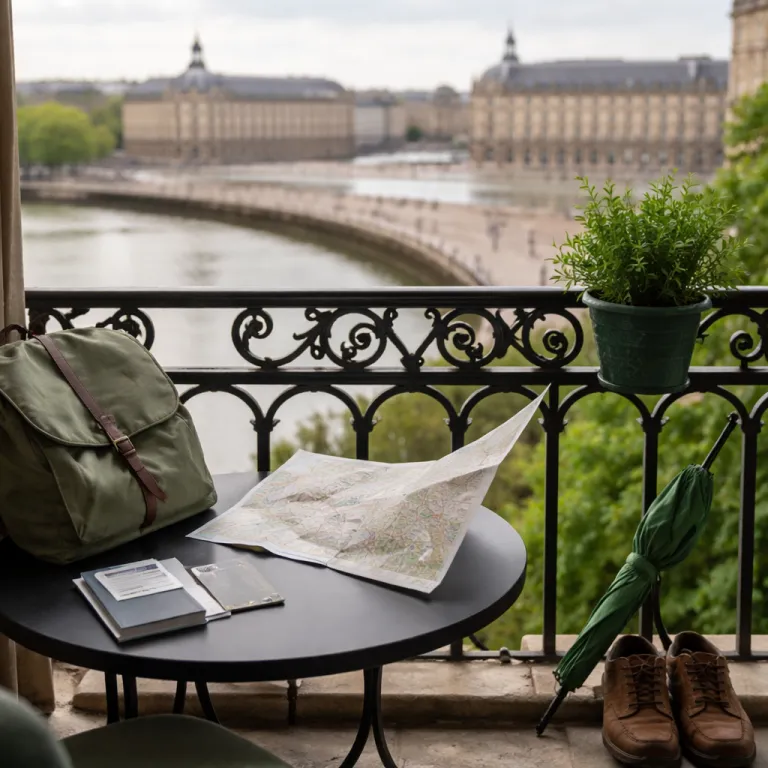
Comfortable walking shoes are essential, because the limestone pavements and cobbles around Porte Cailhau and Saint‑Pierre can be uneven. A light bag with a water bottle, sun protection and a compact umbrella will cover most weather scenarios in this Atlantic city. If you are staying in a nearby hotel, you can travel light and return to your room between segments of the walk, which keeps the experience unhurried and elegant.
Where should I stay to be close to the main UNESCO sites?
The most convenient areas for a Bordeaux UNESCO walk are the riverfront around Place de la Bourse, the Triangle d’Or near the Grand Théâtre and the quieter streets between Palais Rohan and Notre‑Dame. From these districts, you can reach most key monuments on foot within fifteen minutes, which means you rarely need a taxi during the day. Choosing a hotel in these quarters turns the entire historic city into an extended lobby, where every step between meetings or meals becomes part of the architectural narrative.