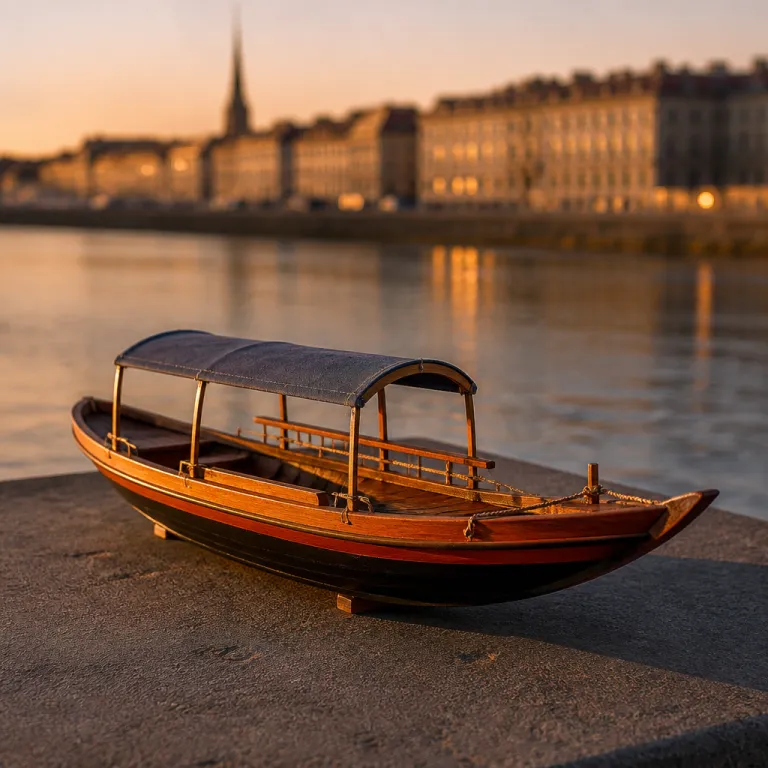
The quiet cheat code to reading Bordeaux from the water
Stand on the Pont de Pierre and the Garonne looks decorative, almost like a sepia backdrop for a postcard of Bordeaux. Step onto a slow boat and the same river turns into a moving grandstand, giving you a three-hour masterclass in how the city, the wider wine region and the Gironde estuary actually work together. A well-chosen Garonne river cruise lets you read façades, ports and silty currents with the same care you give to a glass of Bordeaux wine.
The city was built facing this river, then spent decades pretending the Garonne did not exist, and only recently turned back again with renovated quays and new tram lines sliding along the waterfront. From a boat you feel that pivot in your bones: the limestone curve of Place de la Bourse, the industrial scars of Bacalan and the right bank’s brick housing blocks line up like chapters in a guided tour. A thoughtful cruise itinerary will use that sequence, not a loudspeaker, to explain why this port once rivalled any in France.
For couples staying in luxury hotels, the temptation is to treat river cruises as a sideshow, something to squeeze between a Saint-Émilion tour and a tasting of wine–canelé pairings. That is a mistake, because the right river cruise turns into the spine of your stay, connecting your room key to the wider Garonne–Gironde landscape. Choose carefully and your Bordeaux cruises will feel like an edited film, not a bus tour that happens to float.
Local organisers understand this narrative power and now curate a specific type of guided cruise for visitors who want more than background music and a glass of generic wine. One three-hour sightseeing cruise coordinated by Bordeaux Tourism & Conventions typically boards at the Ponton d’Honneur on Quai Richelieu, then traces the river past the historic centre before looping towards the industrial north. The format mixes live commentary, audio guides and printed brochures, which means each person on board can find a rhythm that suits their way of listening.
On these cruises, boat operators work with local historians and wine producers, so the story of the city is always anchored in the wider region and its vineyards. You hear that the Garonne river runs for about 602 kilometres from the Pyrenees to the estuary, but you also hear how those 602 kilometres shaped trade routes, fortunes and the architecture now facing the water. For a couple used to reading hotel reviews before booking, this level of context feels reassuringly precise.
Practicalities matter on a three-hour stretch, even on a premium Bordeaux cruise that focuses on culture rather than entertainment. Wear comfortable clothing, arrive at least fifteen minutes early and bring a camera, because the light on the Garonne changes quickly as you pass under each bridge. If you are planning several tours across Bordeaux, treat this cruise as your first orientation, not your last-minute extra.
From €2.50 to private decks : choosing the right boat
Not every boat on the Garonne is worth your afternoon, especially if you have only one full day in Bordeaux. Think of the options as a spectrum, from the Bat³ public ferry at one end to fully private cruise charters at the other, with classic guided tours in between. The art lies in matching the right Garonne river experience to your mood, not to the loudest brochure.
Start with the Bat³, the city’s public river ferry that quietly offers one of the cheapest cruises in France. For the price of a tram ticket, roughly €2.50 for a single TBM journey at the time of writing, you can ride from Cité du Vin to Stalingrad and back, a round trip that takes about fifty minutes and gives you a surprisingly complete snapshot of the riverfront. If you are staying in a central hotel and want to stretch your legs between tastings, this is the most efficient of all boat tours.
The Bat³ is not a formal guided cruise, yet the route does much of what a €50–€60 tourist cruise will do, gliding past the golden curve of the city and under the Pont Jacques Chaban Delmas with its tall ship lifts. You will share the deck with commuters, students and families, which makes this public river crossing a useful antidote to more curated tours Bordeaux sometimes pushes. For a couple, it is also a discreet way to scout the water before committing to a longer Garonne cruise.
Step up a level and you reach operators such as Bateaux Bordelais, which run short Bordeaux cruises with live commentary focused on architecture and history. These departures usually last between one and two hours, often with a glass of Bordeaux wine or a small wine–canelé pairing included in the ticket. Typical prices range from about €18 to €30 per adult, depending on season and inclusions, and advance booking is strongly recommended in high season.
For many visitors, a standard Bateaux Bordelais guided cruise is the right compromise between time, cost and depth. You sit on an open or semi-open deck, listen to commentary in several languages and watch the city slide by while the crew points out landmarks such as Place de la Bourse, Pont de Pierre and Cité du Vin. These Garonne sightseeing options are especially useful early in your stay, before you dive into more specialised tours or wine-focused excursions.
If you are planning a romantic weekend and care as much about your room as your river view, align your cruise choice with your hotel style. Our guide to the best hotels in Bordeaux pairs well with this decision, because the same logic applies on water and on land. A couple who prefers hushed lobbies and precise service will probably enjoy a quieter, more curated Bordeaux cruise rather than a crowded sightseeing tour.
When private hire makes sense : yachts, proposals and long lunches
There is a moment when a shared deck and a plastic cup no longer fit the occasion. If you are planning a proposal, a milestone birthday or a four-generation family lunch, a private Bordeaux charter turns the Garonne into your own slow-moving terrace. In that context, the cost per person often compares favourably with a long tasting menu ashore.
Operators such as Yachts de Bordeaux and Burdigala Cruises specialise in this more intimate style of river cruise, with boats configured for small groups who want space, silence and tailored service. You board near the centre of Bordeaux, often at central pontoons such as Ponton d’Honneur or nearby quays, then slip past the façades while staff pour carefully chosen Bordeaux wine and set out plates that might include local pastries or a savoury twist on wine–canelé flavours. The pace is unhurried, the commentary more like a conversation than a script, and the Garonne feels suddenly private.
On these charters, the route can be adjusted to your plans, which is where the wider region and the Gironde estuary come back into play. A three-hour Garonne cruise might focus on the urban stretch, while a longer itinerary pushes towards the confluence where the Garonne–Gironde waters widen and the banks turn greener. Couples who enjoy slow travel often choose a sunset slot, when the city lights begin to shimmer on the river surface.
Private hire also makes sense if you are travelling as a small group of friends who care about wine and architecture in equal measure. A guided tour format can be built into the cruise, with a local historian on board to explain how the port shaped the fortunes of Bordeaux and how the river traffic of the past carried barrels rather than visitors. In that setting, the line between guided cruise and private salon blurs in the best possible way.
For a more characterful stay on land, pair such a charter with a hotel that understands intimacy and texture. Properties like the one profiled in our review of the case for staying smaller in Bordeaux echo the same philosophy as a well-run private boat tour. Both favour precise details, from linen to lighting, over spectacle.
When you read reviews of these private cruises, focus less on the menu and more on how the crew handled timing, commentary and the small frictions of life on a boat. A good operator will anticipate the needs of each person on board, from shade to seating, and will adjust the pace of the tour accordingly. That level of attention is what turns a simple Garonne outing into a memory that anchors your whole stay.
What you actually see : bridges, brick towers and a submarine base
The real argument for a Bordeaux river cruise is not the glass in your hand, but the view you cannot get from any quay. From the water, the city’s famous limestone façades become a single continuous theatre set, while the right bank’s seventh-floor brick housing blocks suddenly look like a different town entirely. A slow boat lets you hold both images at once and understand how the city has always balanced elegance and work.
Heading north, most river cruises pass under the Pont Jacques Chaban Delmas, the vertical lift bridge whose towers rise like pale sentinels above the Garonne. When a tall ship or a cruise boat needs to pass, the central span lifts, a reminder that this is still a working port rather than a museum. From deck level, you feel the engineering in your chest as much as you see it with your eyes.
Beyond the bridge, the Bacalan district opens up, with its converted warehouses, the Cité du Vin and, further along, the hulking concrete of the former submarine base. Seen from a Bordeaux cruise, this block of Second World War infrastructure looks almost abstract, a brutalist counterpoint to the polished stone of the city centre. Some specialised boat tours and Bordeaux river cruise outings linked to Cap Sciences use this stretch to talk about tides, sediment and the environmental future of the Garonne–Gironde system.
On the way back towards the heart of Bordeaux, the boat usually glides past Place de la Bourse, whose curve was designed to be read from the river. You understand why the city once turned its back on the water when cars and warehouses clogged the quays, and why the recent reopening of the riverfront has changed the way locals use the space. A well-timed guided tour will point out how tram lines, cycle paths and new housing now stitch the banks back into daily life.
Even short cruise options, such as those run by Bateaux Bordelais, manage to include this full visual arc in their tours Bordeaux programmes. The commentary often highlights how the Garonne’s tidal range shapes the colour and speed of the water, a detail you feel as the boat leans into each turn. For couples, this moving panorama is often the moment when the city stops being an abstract set of reviews and becomes a place with texture.
One operator summarises the appeal with a simple promise to guests who ask what they will see on a typical three-hour tour: “What landmarks are visible during the cruise? Place de la Bourse, Pont de Pierre, Cité du Vin.” That list is accurate, but it understates the quiet pleasure of watching everyday life unfold along the banks. Laundry on balconies, children on scooters, a lone angler under a bridge — these are the details that stay with you long after the last photo.
Slow travel, wine detours and how the river softens the city
For a couple travelling by rail and staying several nights, the Garonne is not just a backdrop but a way to structure a slower, more layered itinerary. A Bordeaux Garonne river cruise sits comfortably alongside a day trip to Saint-Émilion, a tram ride to the marchés and a late afternoon tasting of Bordeaux wine in a quiet bar. The point is not to tick off tours, but to let the river set the tempo.
Many visitors pair their river cruises with vineyard tours that start or end near the water, using the city as a hub for excursions into the wider region. A guided tour to Saint-Émilion or another part of the Gironde often begins at the same central squares you see from the boat, which creates a satisfying continuity between land and water. When you later enjoy a glass of wine on your hotel terrace, you can trace its journey back along the Garonne in your mind.
Slow travel also means paying attention to seasons and light, not just to prices and reviews. If you are planning a stay outside the busiest months, our guide to what the city does before peak season arrives shows how the rhythm of Bordeaux shifts as the riverbanks fill and empty. A late spring or early autumn Garonne cruise can feel almost private, with softer light and fewer loudspeakers.
There is also a sustainability argument for choosing the river over short hops by car or plane within the region. River travel concentrates movement along an existing corridor, and many operators now work with local partners to reduce waste on board and to highlight eco-friendly choices in their tours Bordeaux programmes. For rail travellers, stepping from a train at Gare Saint-Jean to a boat at Ponton d’Honneur feels like a coherent, low-stress way to cross the city.
On board, the atmosphere tends to encourage a slower kind of conversation, whether you are on a public ferry or a private Bordeaux cruise. Couples often use this time to plan the next day, weighing up a visit to Saint-Émilion against another guided cruise or a more urban tour focused on markets and galleries. The river’s steady pace has a way of softening decisions that might feel rushed on land.
By the time you step back onto the quay, the city usually feels less sharp, more legible. You have seen Bordeaux from the outside, as sailors and merchants once did, and that distance changes how you walk its streets and how you choose your next hotel or tour. In the end, what a three-hour stretch of the Garonne tells you about the city is simple: luxury here is not thread count, but texture.
FAQ
What landmarks will I see on a typical Garonne river cruise in Bordeaux ?
Most standard cruises along the Garonne in Bordeaux include views of Place de la Bourse, Pont de Pierre and the Cité du Vin, as well as several bridges and the renovated riverfront quays. Longer tours may extend towards the Bacalan submarine base and the Pont Jacques Chaban Delmas, giving a broader sense of the port’s industrial past. Check the route map before booking, because each operator designs its own circuit along the Bordeaux river.
Are refreshments usually available on board during a three hour cruise ?
Many guided cruises and private charters offer refreshments such as local wine, soft drinks and pastries, sometimes including regional specialities like canelés. On more curated tours, operators often work with nearby wine producers to showcase specific Bordeaux wine selections. Public ferries such as the Bat³ focus on transport rather than catering, so you should not expect the same level of service on those boats.
Is a Garonne river cruise suitable for children and multigenerational groups ?
Family groups generally find the calm pace of a river cruise easy for all ages, from children to grandparents. Operators that specialise in guided tours usually provide clear safety briefings, accessible seating and sheltered areas, which helps when travelling with several people in different age brackets. For very young children, shorter cruise options or the Bat³ ferry can be more comfortable than a long three-hour tour.
How far in advance should I book a Bordeaux Garonne river cruise ?
For public ferries such as the Bat³, advance booking is not required, as tickets work like standard city transport. For popular guided cruises and private charters, especially around weekends and holidays, booking several weeks ahead is wise to secure your preferred time slot and boat size. Couples planning proposals or special events on the water should contact operators early, as sunset departures and smaller yachts are limited.
Where do most Garonne river cruises start and end in Bordeaux ?
Many cruises depart from central pontoons along the left bank, such as the Ponton d’Honneur near Quai Richelieu, which is within easy reach of the historic centre and major hotels. Some tours Bordeaux wide use alternative embarkation points closer to Cité du Vin or the Bacalan district, especially for themed outings linked to Cap Sciences or vineyard visits. Always check your ticket for the exact pontoon name and allow time to walk along the quays before boarding.