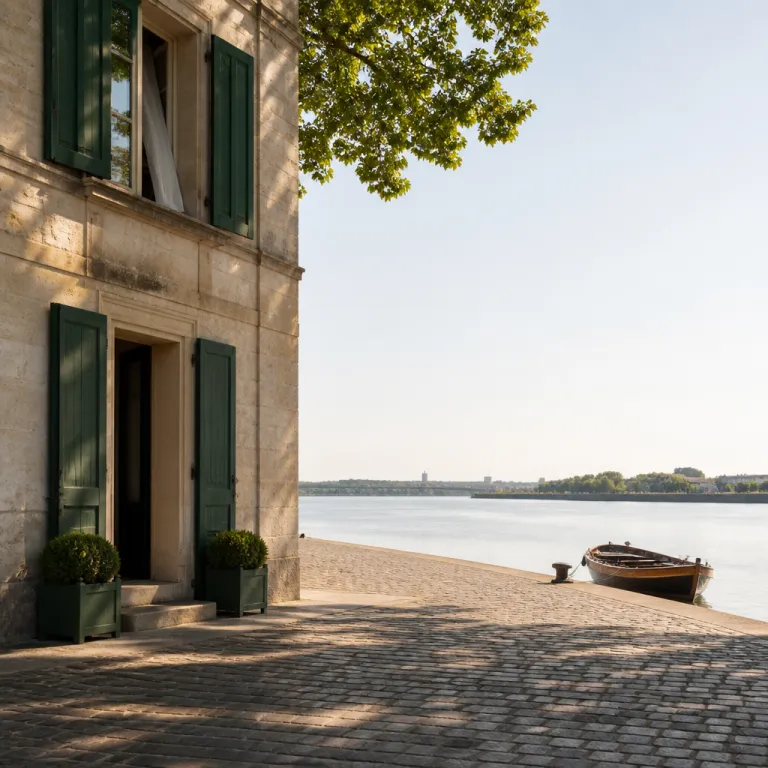
Chartrons district Bordeaux late summer : a family quarter exhaling
Chartrons in late summer is the part of Bordeaux that locals quietly keep for themselves. The historic merchants’ quarter slows to a measured pace, and families who choose to stay here rather than in the denser centre of Bordeaux feel the difference with every step along the Garonne. For a premium family planning to visit Bordeaux with children, this is the week when the city exhales and the streets between the river and Rue Notre-Dame finally sound like a neighbourhood again.
The identity of Chartrons is written in stone façades and in wine, because this was once the warehouse spine of Bordeaux wine merchants trading across southwest France. Walk the quayside from Place des Quinconces northward and you trace that history in long, pale buildings that now hold design shops, quiet restaurants and a scattering of discreet wine bars where the wine list still nods to Saint-Émilion and the Médoc. Parents who book a hotel here are not chasing the loudest scene in France; they are choosing the best compromise between access to the city and a calm base where a child’s nap is not a logistical puzzle.
Late July and late summer thin the crowds, and the Chartrons district becomes a study in absence. Some institutions close for a week or two, such as the Musée du Vin et du Négoce and several galleries around the antiques triangle near Rue Notre-Dame, while others keep their doors open and quietly welcome those who stay. Typical opening hours for the museum run from late morning to early evening on most days (often around 10:00 to 18:00), but late summer can bring a short annual closure, so checking current schedules before you travel is wise. That mix of shutters and open doors is exactly what makes this part of Bordeaux feel like a real French quarter rather than a stage set for day trips and tour buses.
Families notice the silence first. The quay walk that in spring hosts runners and cyclists becomes a long, almost private promenade where children can count the benches and watch the river traffic without being jostled, and where the Atlantic breeze that runs up the Garonne cools the air in a way you rarely find deeper inside the city. When you stand near the water and look back towards the spires of Saint-Michel and the towers of Saint-Pierre, you see Bordeaux Saint-Michel and Bordeaux Saint-Pierre as distant markers, not obligations.
That distance matters when you travel with children. You can still reach the centre around Saint-Paul, Saint-Pierre and Saint-Jean in a short tram ride on line B or C, or a 20 minute walk of roughly 1.5 kilometres, but you return to a quieter grid of streets where the loudest sound in the evening is often cutlery on plates from a nearby restaurant. For a premium family, Chartrons in late summer offers the best version of city life in Bordeaux: close enough to the grand monuments, far enough to sleep well.
Walking the quiet spine : quays, playgrounds and Jardin Public
Start a two day stay in Chartrons with a simple ritual that children understand immediately. Step out in the morning, follow Rue Notre-Dame down to the river, and let the quayside benches set the rhythm of your first day in Bordeaux. This part of the Chartrons district in late summer is not about ticking monuments; it is about giving your family the space to read a city at half volume.
The walkable spine from Place des Quinconces northward is one of the best urban strolls in southwest France for families, because it combines water, shade and just enough distraction. You pass the skate park, the long lines of plane trees and the occasional wine bar terrace where parents can pause for a glass of Bordeaux wine while children share a carafe of water and watch the trams slide by. When the sun climbs, cut back inland towards Jardin Public, the city’s green salon, where lawns, ducks and a small playground turn a simple detour into a half day outing.
Children remember details, not itineraries. They remember the small playground on Place Saint-Louis, tucked behind the main flow of visitors, where local families still meet in late afternoon when the Atlantic air cools the stones and the Chartrons streets feel almost village like. They remember the carousel near Jardin Public, the way the gravel paths crunch underfoot, and the fact that lunch can be a picnic from a local bakery rather than a formal restaurant menu with too many courses.
Parents, meanwhile, quietly map the city around them. From Chartrons you can see how Saint-Pierre and Saint-Paul form the medieval heart, how Saint-Michel rises further south with its spire, and how the station quarter around Saint-Jean anchors the other end of the tram line. Day trips to Saint-Émilion or to the Médoc start from here as easily as from any central hotel, but your children’s first memory of visiting Bordeaux will be the river, not a queue.
On Sunday, the Marché des Chartrons gives this part of Bordeaux a different pulse. Smaller than the Marché des Capucins, which we have explored in depth in our guide to the working market of Bordeaux at dawn, it draws a more local crowd of families, retired neighbours and a few in the know visitors who highly recommend it for a slower, more conversational market experience. Stalls usually open from mid morning to early afternoon (often around 8:30 to 13:30), enough time to buy fruit, cheese, maybe a roast chicken for lunch, and to realise that in Chartrons during late summer, the best restaurant at midday might simply be your own table back at the hotel.
Mondrian Les Carmes : the new anchor that reads the quiet
Every neighbourhood that matters has a hotel that understands its tempo. In Chartrons, Mondrian Bordeaux Les Carmes has quickly become that anchor, a contemporary property that reads the quieter late summer weeks not as a dead season but as the moment when its promise to guests makes the most sense. Families who book here are not chasing the cheapest deal; they are looking for a stay that aligns with how they actually move through the city. We have no commercial relationship with the hotel; it is included here because it fits the way premium families use this district.
The hotel sits within easy reach of Rue Notre-Dame, the antiques triangle and the quays, which means you can step out for a morning walk along the river, retreat for a quiet nap, then head back out for an early dinner without ever feeling rushed. Walking times are short: Jardin Public is roughly 10 minutes away on foot, the riverfront about the same, and tram stops on line B or C connect you to Saint-Jean station in around 15 to 20 minutes. Rooms are sized and configured in a way that works well for premium families, with enough space for luggage, strollers and the inevitable toys that accumulate over a few days in Bordeaux. When you return from a long day of exploring restaurants, wine bars and the wider city, the building feels like a calm, upholstered pause rather than another spectacle.
Service is where Mondrian Les Carmes earns its place in our guide to the best luxury hotels in Bordeaux. Staff understand that a family might want to book an early table at a nearby restaurant one night, then order a simpler French style dinner from a shorter menu the next, and they handle both with the same quiet efficiency. When the heat builds, they know which shaded corner of Jardin Public will still catch the breeze from the Garonne, and which wine bar will welcome children at an outdoor table while parents share a glass from a thoughtful wine list that includes both Bordeaux wine and a few lighter options from elsewhere in France.
For business travellers who extend a work trip into a family weekend, Mondrian Les Carmes also connects neatly with the rest of the city’s premium ecosystem. You are a short ride from the hotel bars we profile in our guide to Bordeaux cocktails for the business traveller, yet you sleep in a quarter where the streets fall quiet early and the only late noise is the clink of glasses from a nearby wine bar terrace. That balance between access and retreat is rare in the centre of Bordeaux, and it is why we highly recommend this address for families who want the city without the constant soundtrack.
Chartrons also offers alternatives at a smaller scale, such as La Cour Carrée, which sits closer to the historic core but still benefits from the generally lower late summer occupancy that characterises Bordeaux. Set in a traditional townhouse, it offers fewer rooms than the Mondrian and a more intimate feel. During quieter weeks, properties like this often introduce special offers with discounted rates and more personalised experiences, and families who book early usually secure the best combinations of connecting rooms and flexible cancellation. In a city where luxury can sometimes feel performative, Mondrian Les Carmes and its peers in Chartrons focus instead on texture: not just thread count, but how the whole stay feels when half the people have left.
Eating well when half the restaurants close
Late summer in Chartrons can surprise first time visitors who expect every restaurant to be open every day. The reality is that many chefs and owners in Bordeaux take their own holidays in this period, which means shutters down on some of the best known addresses and a more selective landscape for families who want to eat well without drama. The district therefore rewards a little planning and a willingness to follow the local rhythm.
Start by thinking in terms of days, not just meals. On Saturday, when more places are open, you might book a table at a restaurant in the historic centre around Saint-Pierre or Saint-Paul, combining a stroll through the old streets with an early dinner that suits children’s schedules and keeps everyone back at the hotel before the late night noise begins. On quieter weekdays, look to the restaurants that keep steady hours in Chartrons itself, where the menu changes less dramatically and the welcome feels more local.
Belle Campagne and Glouton, for example, are known for their focus on southwest France produce and a style of French cooking that respects the seasons without turning every plate into a thesis. Both sit within a short tram or taxi ride of Chartrons and usually open for lunch and dinner on several days of the week, though exact schedules shift in August and should be checked directly. When they are open in late summer, they offer exactly what a premium family needs: clear menus, a relaxed atmosphere and staff who understand that a child’s lunch might be a single well cooked dish rather than a full tasting menu. La Tupina, further south towards Saint-Michel, remains a reference for traditional cuisine, though you should always check current opening hours and book ahead, because late summer schedules can shift.
For simpler days, the Marché des Chartrons becomes your best ally. You can assemble a picnic from local producers, then walk back along Rue Notre-Dame or the quays to a bench overlooking the river, turning lunch into a small adventure that costs less than a formal restaurant and often pleases children more. In the evening, a handful of wine bars in Chartrons serve short menus of charcuterie, cheese and seasonal plates, and while these are not full scale restaurants, they can work beautifully for an early, informal dinner when everyone is tired from a day of walking.
Across the riverfront, you will also find more contemporary spaces near the Cité du Vin, where restaurants and wine bars cater to visitors who have just toured the museum and want to extend the experience with a glass of Bordeaux wine or a flight that includes Saint-Émilion and other appellations. Families can stop here on the way back from a tram ride or a river cruise, then retreat to the quieter streets of Chartrons for the night. The late summer version of the district does not offer every option, every day, but what remains open tends to be what locals themselves choose when the city slows.
Hidden gems, day trips and a quarter that breathes
Chartrons rewards those who look beyond the obvious postcard views. On a Saturday morning, when children are content with the playground on Place Saint-Louis or a slow circuit through Jardin Public, parents can slip into the antiques triangle around Rue Notre-Dame for an hour of browsing that feels like a private museum of French domestic history. Fewer buyers in late summer mean more conversation with dealers and the quiet pleasure of handling objects that once lived in townhouses across the city.
Hidden gems here are often small rather than spectacular. A narrow wine bar with a short but sharp wine list that includes both classic Bordeaux wine and a few bottles from less expected corners of France, a local épicerie that still writes its prices by hand, a side street where the only sound is a radio drifting from an open window. These are not the places that appear on standard lists of the best things to do in Bordeaux, yet they are exactly what many premium families remember when they talk about their stay months later.
From Chartrons, day trips are straightforward without being obligatory. You can take a tram or taxi to Bordeaux Saint-Jean station in about 15 to 20 minutes, then a train to Saint-Émilion for a day among vines and limestone lanes, returning in the evening to a quarter that feels almost empty compared with the tourist bustle of the village. Our guide to staying in Médoc after Saint-Émilion explains why some travellers now prefer to sleep in wine country rather than just visit it. You can also head south towards Saint-Michel or west towards the Atlantic, but many families find that a single well chosen excursion is enough when the base in Chartrons already offers so much quiet texture.
Back in the city, the Cité du Vin stands as a contemporary counterpoint to the older wine merchants’ houses of Chartrons. Families can spend a half day here, moving through interactive exhibits that explain how Bordeaux wine became a global reference, then return along the riverfront to a hotel that feels human in scale and grounded in its own neighbourhood. The contrast between the museum’s polished narratives and the lived, slightly faded elegance of Chartrons is part of the charm.
As evening falls, the Atlantic breeze pushes up the Garonne and the temperature drops a few degrees, and this is when Chartrons in late summer feels most itself. Children run one last loop around the square, parents share a final glass at a nearby wine bar, and the city’s grander quarters across the water seem very far away. When half the people leave, a quarter like Chartrons does not empty; it breathes more clearly, and for a family that might be the best luxury of all.
Practical notes, La Cour Carrée and booking the quiet week
Planning a family stay in the Chartrons district in late summer means understanding how the city’s hospitality calendar works. Average occupancy in Bordeaux during this period often sits lower than in peak spring or harvest seasons, which creates opportunities for premium travellers who can be flexible with dates and willing to book a little earlier. Properties in and around Chartrons, from larger addresses like Mondrian Les Carmes to more intimate hotels closer to the centre, quietly compete for these guests with thoughtful packages rather than loud promotions.
La Cour Carrée, for example, offers a different scale of experience from Mondrian Les Carmes but shares a similar respect for context. Set within a classic Bordeaux townhouse, it appeals to travellers who want a French sense of place and a shorter walk to Saint-Pierre, Saint-Paul and the main shopping streets, while still being within easy reach of Chartrons and the river. For families who split their time between the antiques quarter, Jardin Public and the denser centre of Bordeaux, this can be an elegant compromise.
During quieter weeks, some hotels in Bordeaux collaborate with local restaurants, wine bars and tour operators to create experiences that feel more like a curated stay than a simple room booking. These might include guided walks through Chartrons focusing on the history of Bordeaux wine, tastings that highlight the differences between Saint-Émilion and Médoc, or even early access to certain galleries that would otherwise be closed. For families, the best of these offers are the ones that respect children’s attention spans and build in time for rest back at the hotel.
When comparing options, pay attention to how each property talks about the neighbourhood rather than just its own amenities. A hotel that can explain which playgrounds are shaded in late afternoon, which restaurants remain open on a Tuesday, and how to reach Cité du Vin without a long tram ride is usually one that understands the lived reality of a family stay. In this context, Mondrian Les Carmes stands out as the hotel that reads Chartrons’ quietest week correctly, framing it not as a lack of activity but as a rare chance to experience the city at a humane pace.
For travellers who like clear information before they book, it helps that some properties answer practical questions directly. "What amenities does La Cour Carrée offer?" and "Are there any special events during the promotion?" are addressed with reassuring simplicity: "Free Wi-Fi, breakfast, and concierge services." and "Yes, wine tastings and guided tours." Families who value this kind of clarity tend to navigate Bordeaux, and especially Chartrons in late summer, with more confidence and less noise.
FAQ
Is Chartrons a good area for families to stay in Bordeaux ?
Chartrons works particularly well for premium families because it combines a calm residential feel with easy access to the historic centre. You are close to Jardin Public, the riverfront promenade and small playgrounds like the one on Place Saint-Louis, which keeps children engaged without constant transport. At the same time, tram connections to Saint-Jean station and the quarters around Saint-Pierre, Saint-Paul and Saint-Michel make it simple to reach the rest of the city.
How quiet is Chartrons in late summer compared with central Bordeaux ?
In late summer, especially around late July, Chartrons is noticeably quieter than the areas around Saint-Pierre and the main shopping streets. Some galleries and the Musée du Vin et du Négoce close for short breaks, and a number of restaurants reduce hours, which lowers foot traffic on Rue Notre-Dame and the quays. For many families this reduced noise and slower pace are an advantage, because they can enjoy Bordeaux without crowds while still finding enough open cafés, wine bars and local shops.
Is Mondrian Les Carmes well located for visiting Cité du Vin and other attractions ?
Mondrian Les Carmes sits in a position that makes it easy to reach both Cité du Vin to the north and the historic centre to the south. You can walk along the riverfront to the museum in around 20 to 25 minutes, or take a short tram ride if travelling with younger children. From the hotel, Jardin Public, the antiques triangle around Rue Notre-Dame and the main tram lines towards Saint-Jean station are all within comfortable walking distance.
Should I book restaurants in advance for a late summer stay in Chartrons ?
Advance booking is wise, especially for dinners and for popular addresses such as Belle Campagne, Glouton or La Tupina. Late summer is when many chefs take holidays, so the number of open restaurants in Bordeaux can be lower even if overall visitor numbers drop. Reserving a few key meals and leaving lunches flexible for markets like Marché des Chartrons usually gives families the right balance between structure and spontaneity.
How far is Chartrons from Saint-Émilion and other wine regions for day trips ?
From Chartrons you can reach Bordeaux Saint-Jean station in about 15 to 20 minutes by tram or taxi, and from there trains to Saint-Émilion take roughly 35 minutes. Organised day trips to vineyards in Saint-Émilion, Médoc or other parts of southwest France often include pick up points in the centre, which are still convenient from Chartrons. Many families choose to base themselves in the city and use these services rather than driving, so that everyone can enjoy tastings without logistical stress.