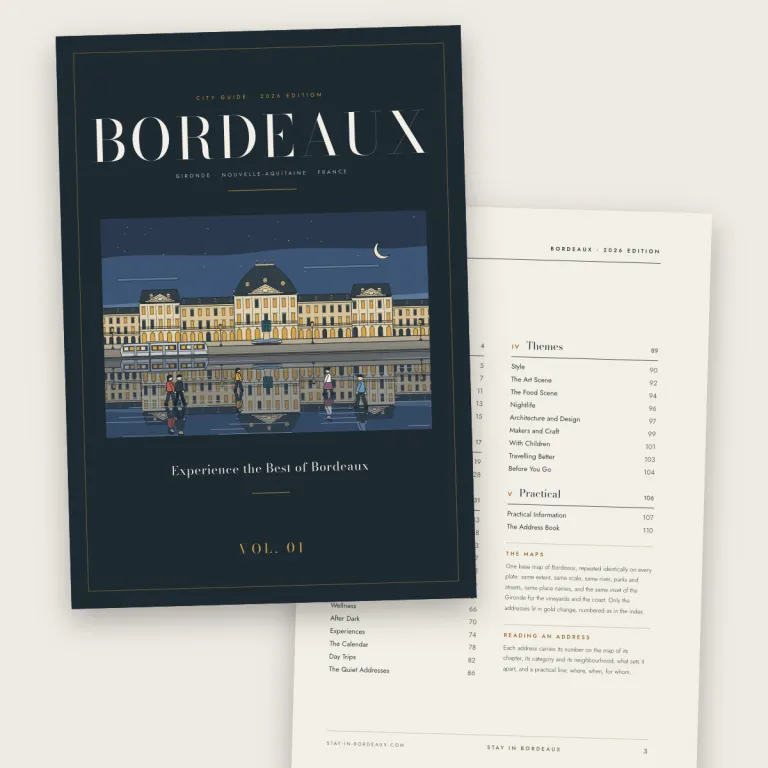
Bordeaux is a city you can walk across in an afternoon and a wine region you cannot see in a week. The Bordeaux City Guide, our 2026 edition, starts from that split: it reads the city neighbourhood by neighbourhood, then tells you exactly when a car, a train or a ferry becomes necessary to reach the vines.
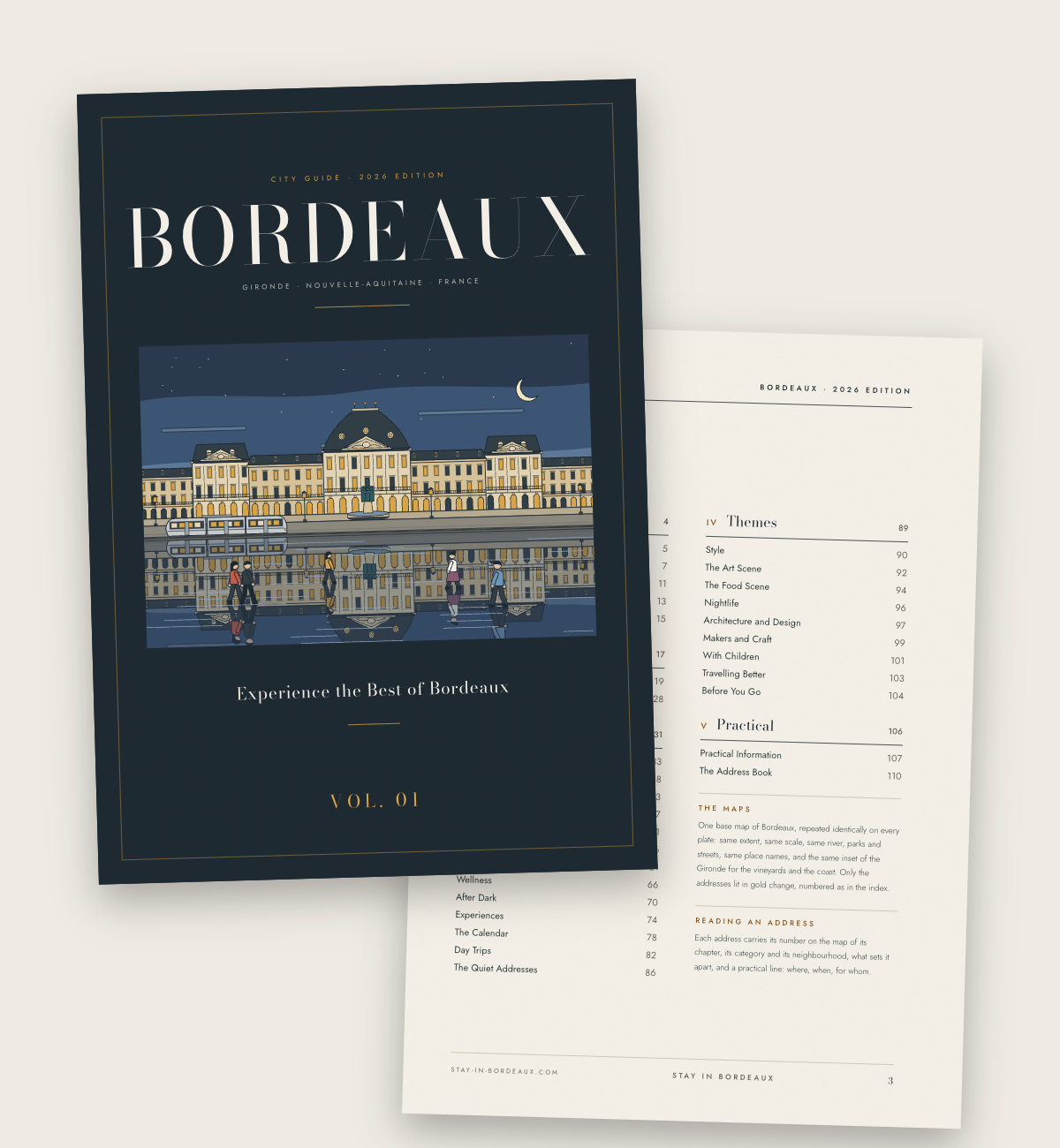
What is inside
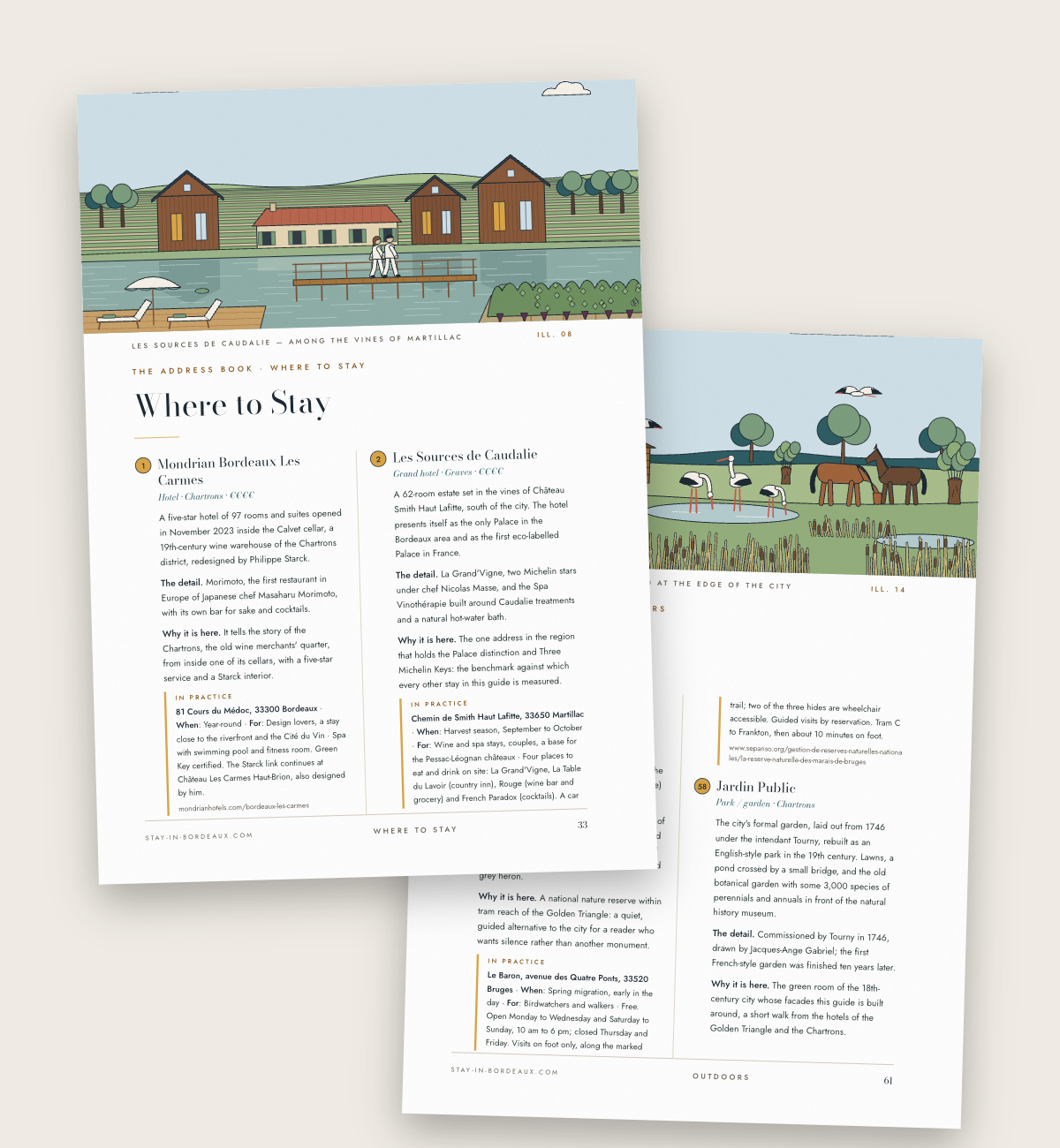
112 plates. 102 numbered addresses, from a hidden cocktail bar behind a grandfather clock on the Quai des Chartrons to a château hotel in the vines of Pauillac. 20 maps. 30 illustrations. Three itineraries. Five parts: the opening, the territory, the address book, the themes and the practical section.
The address book is the core of it: 10 places to stay, 12 to eat, 8 to drink, 6 for coffee and early hours, 10 for shopping, 10 for culture and heritage, 8 outdoors, 5 for wellness, 6 after dark, 8 experiences, 8 dates in the calendar, 6 day trips and 5 quiet addresses for readers who already know the city.
Six neighbourhoods, one river
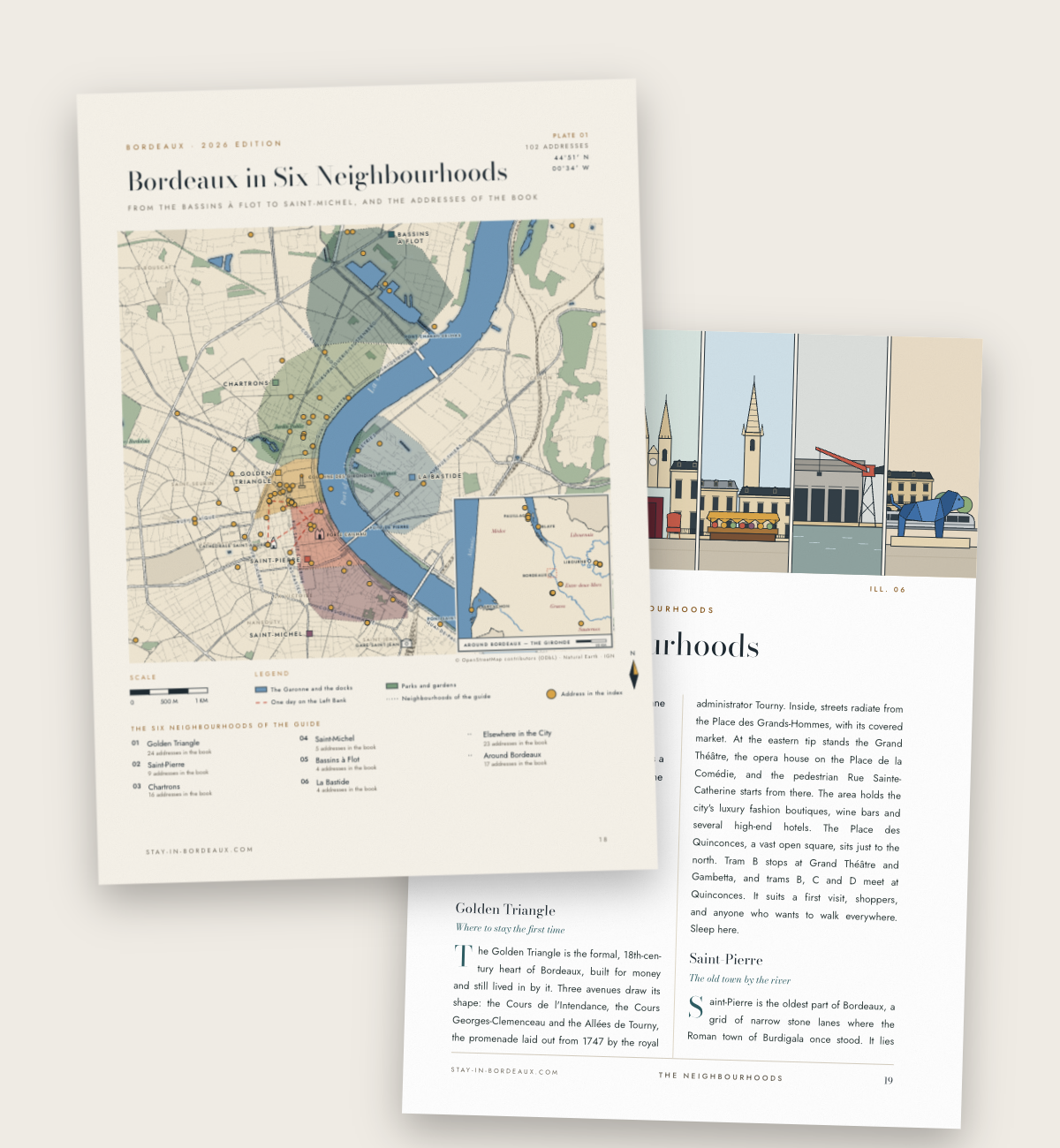
The guide divides Bordeaux into six neighbourhoods, each with its own pace and its own reason to stay there: the Golden Triangle, Saint-Pierre, the Chartrons, Saint-Michel, the Bassins à Flot and La Bastide on the right bank.
The addresses are spread the way they really are. The Golden Triangle holds 24 of them, the Chartrons 16, Saint-Pierre 9, Saint-Michel 5, the Bassins à Flot and La Bastide 4 each. Another 23 sit elsewhere in the city, and 17 lie around Bordeaux, in the Graves, the Médoc, Saint-Émilion and on Arcachon Bay.
20 maps on a single base
Every map in the guide uses the same drawing of the city: same extent, same scale, same river, parks and streets, same place names, and the same inset of the Gironde for the vineyards and the coast. Only the addresses lit in gold change, numbered as in the index. One map shows all 102 addresses, six show one neighbourhood each, and thirteen show one chapter of the address book.
Every address says why it is there
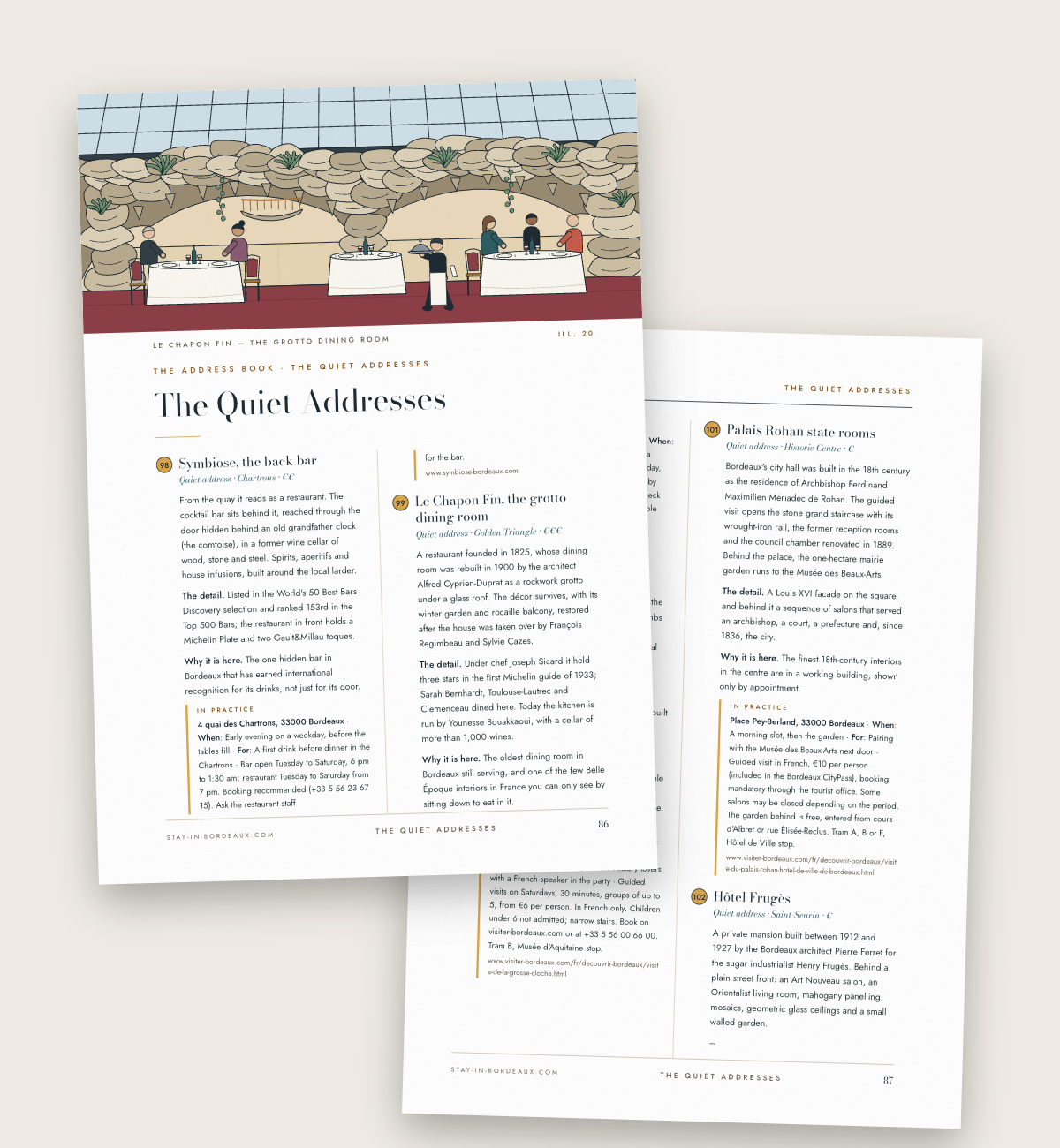
Each entry carries its number, its category, its neighbourhood, a detail that sets it apart and one line on why it made the book, followed by a practical block: where, when, for whom.
Le Chapon Fin, in the quiet addresses, is there for its dining room. The restaurant was founded in 1825, and in 1900 the architect Alfred Cyprien-Duprat rebuilt the room as a rockwork grotto under a glass roof. It held three stars in the first Michelin guide of 1933. The guide notes that it closes on Sunday and Monday, and that you should ask for a table under the grotto when you book.
The Grosse Cloche is there for a different reason. Everyone photographs the old belfry from the street; the guided visit climbs through the former town prison to the astronomical clock of 1759 and the bell, five people at a time, on Saturdays. The guide says plainly that the tour is in French only and closed to children under six.
Three itineraries, from one day to seven
Three routes built only from addresses in the guide, with days of the week chosen around the opening days recorded in the book: many tables close on Sunday and Monday, and the Marché des Capucins closes on Monday.
One day on the Left Bank, on foot, Tuesday to Saturday. Coffee at Café Piha at 8:30, the first cycle of the Miroir d'Eau at 10, the Tour Pey-Berland, lunch at Le Chapon Fin, the Grand Théâtre, then Le Pressoir d'Argent Gordon Ramsay for dinner.
Three days, six neighbourhoods, by foot and tram, with a Wednesday to Saturday for day three. The Golden Triangle and Saint-Pierre first, then the Chartrons and the Bassins à Flot, then Saint-Michel and the right bank by the Pont de Pierre.
A week: the city and three wine regions. The three city days, then four nights in the vineyards: the Graves and Les Sources de Caudalie, the Médoc and Château Lynch-Bages, the Lamarque to Blaye ferry across the Gironde, and Saint-Émilion. From day four you need a car or a driver, and most château visits must be booked before you leave home.
Written for a trip from the United States
Temperatures are in Fahrenheit, and the question the guide asks is less the weather than the wine calendar. It flags En Primeurs Week in late April, when about 5,000 wine professionals are in town and the top châteaux give their time to buyers. It warns that in August many estates close for the summer break, including Château Margaux and Mouton Rothschild, and advises confirming every visit in writing before booking flights.
When to read it
Before you book rather than after. Opening days decide the order of a Bordeaux trip more than distance does, and the guide records them address by address. Its page gives access to the download. It opens in the browser, and it is free.