The quiet revolution: why Bordeaux hotel bars now live by the glass
Walk into a serious hotel bar in Bordeaux and the first thing that matters is the by the glass list, not the chandelier. The new bordeaux hotel bar wine by glass philosophy lets a Tuesday night business traveler move from a structured Pauillac to a saline Muscadet without ever committing to a full bottle, turning a routine check in at a city hotel into a compact tasting flight that feels closer to a cours d’œnologie than a minibar raid. In a city built on bordeaux wine and trade, this shift from bottle worship to curated wines by the glass is changing how guests use bars, rooms and even meeting schedules.
The best properties now design their wine bar programmes around three parallel tracks that run through every glass list. There is familiarity for the guest who wants a safe bordeaux wine or Champagne, exploration for the traveler curious about a natural vin from the Right Bank or a Jura savagnin, and a premium tier where first growths and organic biodynamic cuvées appear as rare wines glass options that would once have been locked behind a sommelier’s raised eyebrow. This layered selection means the same bar can serve a quick post meeting drink, a full wine tasting sequence or a quiet solo debrief with one perfect pour.
Bordeaux is uniquely suited to this bordeaux hotel bar wine by glass revolution because the city sits within an hour of hundreds of châteaux and négociants. Sommeliers can adjust their bar wine lists almost weekly, responding to what local producers are pouring at the Conseil Interprofessionnel du Vin de Bordeaux, usually shortened to CIVB, and what international guests are asking for after a visit to La Cité du Vin. When the city’s hotel wine programmes align with that local energy, the bar becomes less a generic lobby space and more a precise place to understand how Bordeaux actually drinks now.
From lobby lounge to liquid atlas: what a serious by the glass list looks like
In a generic international hotel bar, the by the glass page usually reads like an airport duty free shelf translated into liquid form. In Bordeaux, the best hotel spa properties and business focused hotels treat that same page as a map of the city and its vineyards, using each glass pour to connect the guest’s bar stool to a specific appellation, winemaker or even a single parcel of gravel in Saint Pierre or Saint Julien. The result is that a bordeaux hotel bar wine by glass menu can feel like a compressed tour of the region, with detours into Burgundy, Champagne and the more radical natural wines that younger sommeliers champion.
A strong list in this city always starts with bordeaux wine, but it refuses to stop there. You might see a classic Left Bank cabernet poured next to an organic biodynamic merlot from a small château, followed by a lean Chablis, a textured white from Alsace Lorraine and a skin contact vin from the Loire, all available by the glass through Coravin or similar preservation systems that protect fragile wines glass after glass. The point is not to show off labels ; it is to give the traveler a logical progression, where each glass builds on the last and the bar team can pivot depending on whether you are debriefing a board meeting or easing into a long weekend.
Food matters as much as the pour, especially in hotels that take gourmet dining seriously. At properties where the bar sits next to a serious restaurant, the by the glass selection often mirrors the kitchen’s tasting menus, allowing guests to sample the same pairings without committing to a full dinner, which is particularly useful when you arrive late from Paris on the TGV and only want two plates and two glasses. For a deeper dive into how top tables and hotel bars now work together in the city, the analysis of a two star current through Bordeaux’s dining scene at this detailed restaurant and bar review shows how chefs and sommeliers coordinate their lists.
The Coravin effect and the rise of the sommelier as weeknight guide
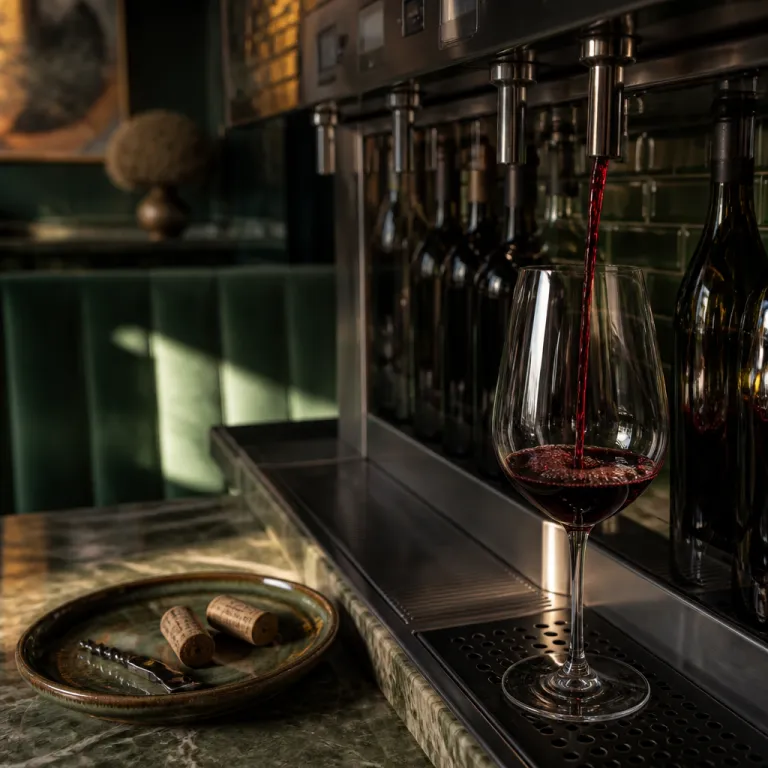
The quiet hero of the bordeaux hotel bar wine by glass movement is not a winemaker but a piece of technology. Coravin and similar systems allow sommeliers to pour from a bottle without pulling the cork, which means a grand cru classé can be served in pristine condition over several weeks, one glass at a time, without the bar absorbing ruinous waste. For the guest in a tailored suit who has one free hour between calls, this means that a single, perfectly preserved glass of first growth bordeaux wine is now a realistic midweek pleasure rather than an extravagant bottle commitment.
Because the risk of opening expensive wines has dropped, the role of the hotel wine specialist has expanded. In the best bars bordeaux has to offer, the sommelier now behaves less like a gatekeeper and more like a guide, reading whether you want a quiet, contemplative glass at the counter or a full wine tasting arc that stretches from a mineral white to a dense, old vine cabernet, with a natural vin from a small producer in between. This is where the city’s depth of training, from the CIVB’s École du Vin to private academies, shows up in the glass rather than in marketing copy.
For business travelers, the calculus changes completely. Instead of retreating to their rooms with a room service tray and a half finished bottle, many now treat the hotel bar as a compact classroom, asking for two or three wines glass options that illustrate a specific theme such as Left Bank versus Right Bank, organic biodynamic farming versus conventional, or Bordeaux compared with a structured Pinot Noir from Alsace Lorraine. If you want to understand how this educational thread now runs through the wider city, the analysis of how Michelin grades Bordeaux châteaux in a new grapes system at this in depth feature shows how classification and tasting culture are evolving together.
Where to sit: from Saint Pierre to Cours d’Alsace Lorraine
The geography of the bordeaux hotel bar wine by glass scene matters, because each neighborhood brings a different rhythm and clientele. Around the Saint Pierre quarter, where narrow streets open suddenly onto small squares, hotel bars tend to be intimate, with low lighting, compact counters and a focus on local wines and small plates that echo the nearby bistros and independent wine bars. Here, a bar vin list might lean into younger producers, natural wines and organic biodynamic cuvées, with the sommelier happy to send you on to a favorite wine shop or one of the independent wine bars once service winds down.
Move up towards Cours d’Alsace Lorraine and the feel shifts. Larger business hotels and properties with a full spa Bordeaux offering tend to sit along or near this axis, and their bars bordeaux programmes reflect a more international mix of guests who might want Champagne, Burgundy or even a structured Italian red alongside classic bordeaux wine. In these spaces, the by the glass selection often runs to several pages, with a clear structure that separates local appellations, international wines and a premium bar Bordeaux section where rare bottles are poured by the glass thanks to preservation systems.
Between meetings, these hotel spa bars become informal hubs where executives compare notes on the day’s visits to La Cité du Vin or to châteaux newly highlighted in the grapes based rankings. A guest might start with a crisp local white before a hammam session, then return later for a darker, more contemplative glass after dinner, effectively turning the bar into an extension of the wellness circuit. For a sense of how water, steam and wine now intersect in the city’s luxury properties, the feature on the quietest hammam hours inside five star hotels shows how spa Bordeaux rituals and bar programmes increasingly speak the same language of slow, attentive pleasure.
Beyond Bordeaux: natural, organic and the new global mix in hotel bars
The most forward looking bordeaux hotel bar wine by glass lists no longer treat the region’s own wines as the only story worth telling. They respect bordeaux wine as the backbone, but they also weave in Champagne, Burgundy, Loire, Rhône and carefully chosen international bottles, creating a dialogue in the glass between local tradition and global experimentation. For a guest used to a standard corporate bar wine list, this breadth can feel like stepping into a curated wine shop rather than a hotel lobby.
Natural wines and organic biodynamic cuvées now appear regularly by the glass, especially in hotels that want to signal a more contemporary, ingredient focused kitchen. A sommelier might pour a cloudy, low intervention vin from a producer championed at Bon Jaja, the well known natural wine bar and shop, next to a polished Left Bank blend, inviting the guest to compare texture, acidity and energy rather than just labels and scores. This is where the city’s proximity to both classic châteaux and experimental négociants becomes a practical advantage ; the bar team can adjust the selection quickly, adding new wines glass options as soon as they taste something compelling.
For travelers who care about sustainability, these organic and natural options are not a niche. They are a signal that the hotel understands how wine culture is shifting, just as much as a well designed spa or thoughtful rooms layout signals that the property understands modern work life patterns. In this sense, the bordeaux hotel bar wine by glass list becomes a quiet but precise indicator of a hotel’s values, as revealing as the thread count on the sheets or the art on the walls, and it reminds you that in this city, luxury is measured not just in stars but in the clarity of what ends up in your glass.
FAQ
How should I read a Bordeaux hotel bar wine by the glass list?
Start by looking at how the list is structured between local Bordeaux appellations, other French regions and international wines. A thoughtful bar will group wines by style or region, with a clear progression from lighter to fuller bodied options, and will usually highlight a few organic or natural wines. If the layout feels random, ask the sommelier to build a short flight of two or three glasses that follow a logical arc.
Can I taste top Bordeaux wines by the glass in hotel bars?
Many high end hotel bars in the city now use Coravin or similar systems, which allow them to pour expensive bottles by the glass without waste. This means you can often order classified growths or rare cuvées in 12 to 15 centilitre pours instead of committing to a full bottle. Availability changes frequently, so it is worth asking what is open that evening rather than relying only on the printed list.
Are natural and organic wines common in Bordeaux hotel bars?
Natural and organic wines have become increasingly visible on serious hotel bar lists, especially in properties with contemporary restaurants or wellness focused positioning. You will often find at least one or two organic biodynamic options by the glass, sometimes from small local producers and sometimes from other French regions. If sustainability matters to you, mention it to the sommelier, who can usually guide you to suitable choices.
Is it acceptable to order just one glass at a luxury hotel bar?
Ordering a single glass is entirely normal in Bordeaux, particularly for business travelers between meetings or before dinner elsewhere. The whole point of the bordeaux hotel bar wine by glass approach is to make high quality wines accessible in small formats, without pressure to stay for hours. Sitting at the counter for one precise pour is part of the culture, not a breach of etiquette.
How does a hotel bar in Bordeaux differ from independent wine bars?
Hotel bars tend to offer broader international selections and more premium wines by the glass, supported by preservation technology and a captive guest base. Independent wine bars often focus more tightly on specific regions, natural wines or small producers, and may have a livelier, more local atmosphere. For a complete picture of the city’s wine culture, it is worth experiencing both during the same trip.