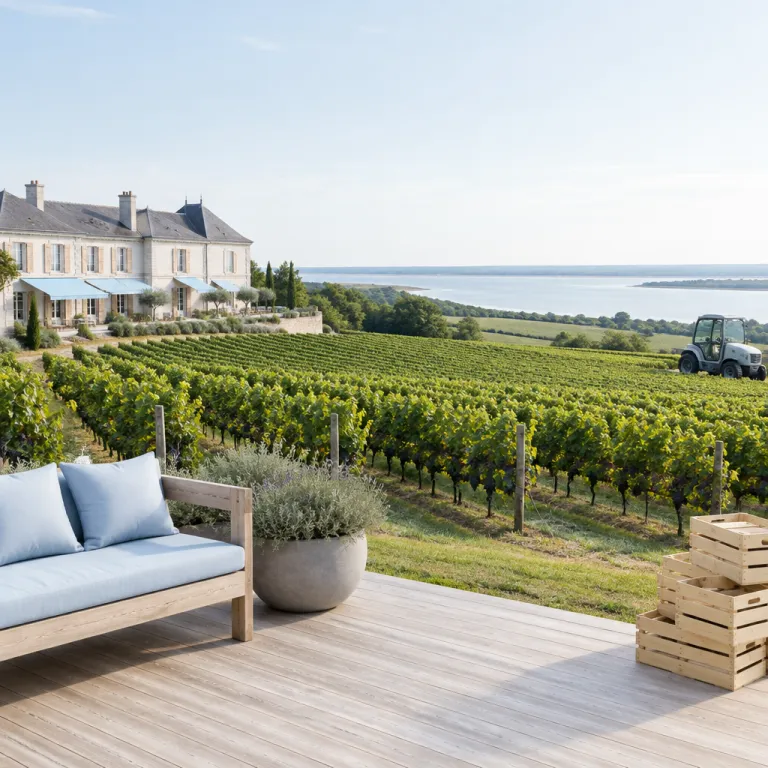
From late summer to full harvest: how the calendar has flipped
Planning a Bordeaux harvest trip now means thinking in terms of late-summer wine travel rather than classic early-autumn escapes, as visitors look to combine an early harvest stay in the city with vineyard visits across the region. Bordeaux winemakers are now bringing in grapes for Crémant and some dry whites from early August, with most Sauvignon Blanc and Sémillon parcels following from mid-August and Merlot and Cabernet Sauvignon starting in late August or early September. That shift means the traditional image of a leisurely Bordeaux harvest in late September or early October now belongs mostly to the archives. For travelers, the change turns a classic early autumn wine experience into something closer to a late-summer immersion in wine country, with heat shimmering over gravel soils and fermentation already humming in the chai. That shift also moves the booking window: rooms in Saint-Émilion and Bordeaux now fill for August rather than late September.
Average harvest dates in the wider Bordeaux region used to cluster around mid-September, but climate change has pushed ripening forward and forced producers to adapt their methods during each harvest season. Historical figures from the Bordeaux Wine Council (CIVB) place the long-term norm for picking around 15 September, while French meteorological scenarios of roughly a 2 °C rise by mid-century (Météo-France, 2020 climate projections) help explain why the harvest is starting weeks earlier and why yields are expected to fall below recent averages of about 40 hectolitres per hectare across the region, even as quality may remain high. The context is stark: repeated summer heatwaves above 35 °C have caused berry shrivelling, dehydration and sunburn on young wood. Yet as Sylvie Cazes, co-owner of Château Chauvin and president of the Saint-Émilion Grand Cru Classé association, told Le Figaro Vin in September 2022, “Sunshine is always good for the vine. The grapes will be more concentrated,” a remark that still frames how many estates view hot, early vintages.
Arrive in Bordeaux in early September now and you will see a patchwork landscape, with some vineyards already stripped and others still holding tight clusters of grapes destined for grand cru cuvées. In Saint-Émilion and the surrounding Saint-Émilion Grand Cru slopes, many parcels will already be picked, while cellars across the region are in full fermentation mode, which changes the feel of any wine tour or harvest tour you book from your luxury hotel base. Instead of watching tractors roll out for a late-September or early-October wine harvest, guests are more likely to walk through cool barrel halls where young Bordeaux wine is already bubbling in tanks, turning a classic vineyard visit into a behind-the-scenes experience focused on technique rather than picking.
For couples planning a romantic full-day excursion, the main decision is now whether to time a Bordeaux escape for the intensity of late-August activity or the calmer, more contemplative mood of late September. A small-group wine tour in early September might include a dawn walk through rows that were harvested only hours before, followed by a tasting of previous vintages that show how the region’s grand terroirs handle heat and drought. By contrast, a private day trip in mid-October will probably skip harvest logistics entirely and lean into cellar architecture, art collections and long lunches, with wines from estates such as Château Lafite Rothschild poured alongside detailed explanations of how irrigation trials and climate-resilient viticulture are reshaping this corner of France. Staying in Saint-Émilion, Margaux or Pauillac puts you inside the vineyards, while Bordeaux itself keeps the restaurants closer.
What you will actually see in the vineyards from August to October
Luxury travelers used to time a Bordeaux harvest visit for the first cool mornings of autumn, but the new reality is that the vendanges atmosphere now arrives in August. By early August, teams are already in the vineyards preparing equipment, and by mid-August manual grape picking and mechanical harvesting are underway in many white-wine parcels, which means that a late-summer stay in a grand city hotel can now include real-time harvest access. For guests checking into properties along the Garonne quays or near the Grand Théâtre, concierge teams are quietly rewriting their playbooks to align wine tours with this compressed calendar. The practical details are kept current by the Bordeaux tourist office.
On a typical full-day small-group excursion into wine country, you might leave Bordeaux after breakfast and reach the gravel banks of the Médoc within an hour, where some plots are already bare and others still carry fruit destined for future grand cru bottlings. Guides now explain not only the classic Left Bank versus Right Bank distinctions but also how the harvest is being split into multiple passes, with earlier picks to preserve acidity and later ones to chase phenolic ripeness, which subtly alters the style of future wines. Couples who want a more intimate wine experience can ask for a private harvest tour that includes time in the sorting room, watching the équipe remove sunburned or shrivelled berries before the grapes drop into stainless-steel tanks.
Right Bank estates around Saint-Émilion and the medieval streets of the village itself offer a different rhythm, especially for guests staying in château hotels that overlook the limestone vineyards. Here, an early-September stay might mean walking from your suite straight into rows where pickers are working, then returning for a vertical tasting that compares cooler vintages with the concentrated wines expected from recent hot years. The dual identity of Saint-Émilion as both a UNESCO World Heritage site and a working appellation becomes very clear when tractors edge past couples on e-bikes, and when the same grand cru estates that host serene tastings in winter are running at full speed in September and early October.
Back in the city, cultural immersion does not stop at the cellar door; it spills into the streets and squares. If your stay overlaps with late June or early summer dates, the Fête de la Musique in Bordeaux offers a June 21 walk that cuts through six districts and four centuries, and this musical thread continues into harvest season with smaller concerts in courtyards and on hotel terraces, which you can explore through this detailed guide to the Fête de la Musique route. Pairing these urban experiences with a wine tour or several wine tours into the surrounding vineyards turns a simple visit into a layered stay, where the same group of travelers can move from organ recitals in Saint-André cathedral to barrel tastings in Pessac-Léognan within a single day. The result is a kind of grand urban–rural choreography that rewards guests who plan their hotel bookings and excursions with the same precision that winemakers now apply to their picking dates.
How early harvest reshapes luxury hotel stays and wine education
The trend toward an earlier Bordeaux harvest is not just a viticultural story; it is already reshaping how high-end hotels program their seasons and how concierges build itineraries. Properties that once pushed wine-country excursions into late September are now advising guests that the best window for seeing active picking and pressing may be from late August to mid-September, especially for those keen on a hands-on harvest experience. That means couples booking suites with river views or spa access should align their dates with the new season if they want to feel the full energy of the vendanges rather than a quieter post-harvest calm.
One practical impact is on cellar access and tasting formats, because during the most intense days of the harvest some châteaux limit visits or shift tastings to temporary spaces while the main cuveries are in use. A well-briefed concierge will steer you toward estates that can host a small group or private tour program without compromising safety, often focusing on properties with separate visitor facilities where you can still enjoy a structured wine experience while fermentation roars in the background. For travelers who care as much about architecture and design as about the wines themselves, this can be an advantage, since you are more likely to see working cellars in motion rather than static showpieces.
The irrigation controversy adds another layer that thoughtful guests will want to understand, especially those staying in hotels that position themselves as gateways to sustainable wine country. In 2022, the Institut National de l’Origine et de la Qualité (INAO) granted exceptional emergency irrigation authorisations to several Bordeaux appellations during a severe drought, signalling a clear recognition that climate volatility is no longer theoretical and that even grand cru estates must experiment to preserve quality. A good guide will explain how these trials intersect with lower yields, higher potential alcohol and changing picking dates, and how this might influence the style of future wines from names such as Château Lafite Rothschild that you may taste during a full-day or half-day excursion.
For guests who want to go beyond surface-level tastings, the city itself offers deep educational anchors that pair well with a luxury hotel stay. The Cité du Vin, for example, can be turned from a quick museum stop into a three-day wine education, as outlined in this in-depth piece on how to make the most of a Cité du Vin visit, and its exhibits now explicitly address climate change, earlier harvests and shifting styles in regions like Bordeaux and beyond. Combine that with a carefully chosen itinerary of wine tours that include both historic châteaux and newer, sustainability-focused properties, and your late-summer Bordeaux harvest trip becomes a case study in how a classic region adapts without losing its identity.
Hotel booking strategy matters more than ever, because the compression of the harvest season into August and early September concentrates demand for both rooms and guides. Couples seeking the best balance between vineyard access, cultural events and quieter city streets should look at shoulder dates around mid-September, when some vineyards are still active but the most intense rush has passed, and when a grand suite in the city can serve as a calm base between excursions. For those who care about how critical tastemakers are re-ranking estates in this new era, the recent Michelin-style grading of leading properties is unpacked in detail in this analysis of how the grapes rating system is rewriting Bordeaux trips, which is essential reading before you choose which château visits to prioritise.
Trustworthy expert quotes and sources
Why is Bordeaux’s harvest starting earlier? As the Bordeaux Wine Council notes in its technical reports on recent vintages (CIVB, 2018–2023), “warmer growing seasons have advanced average picking dates by more than two weeks compared with the late 20th century,” a shift closely linked to climate change and earlier grape ripening. How does an early harvest affect wine quality? In a 2021 interview with Decanter, wine writer Jane Anson explained that “earlier harvests can bring higher sugar levels and lower natural acidity, which alters flavour profiles and the balance between freshness and richness in Bordeaux blends” (Anson, 2021). Can tourists participate in the harvest? According to the Bordeaux Gironde Chamber of Agriculture’s visitor outreach (2022), “many estates now offer supervised harvest experiences for visitors, from half-day introductions to full-day picking and tasting programmes,” especially in late August and early September. These statements, drawn from sector experts and regional data, frame the context in which luxury travelers now plan their stays, from selecting a hotel in the historic centre to timing a visit to Saint-Émilion or the Médoc. For deeper background on climate and harvest dynamics in France and Bordeaux, readers can consult Jane Anson’s reporting on regional vintages, the Bordeaux Wine Council’s technical notes and Météo-France climate projections published in 2020.